
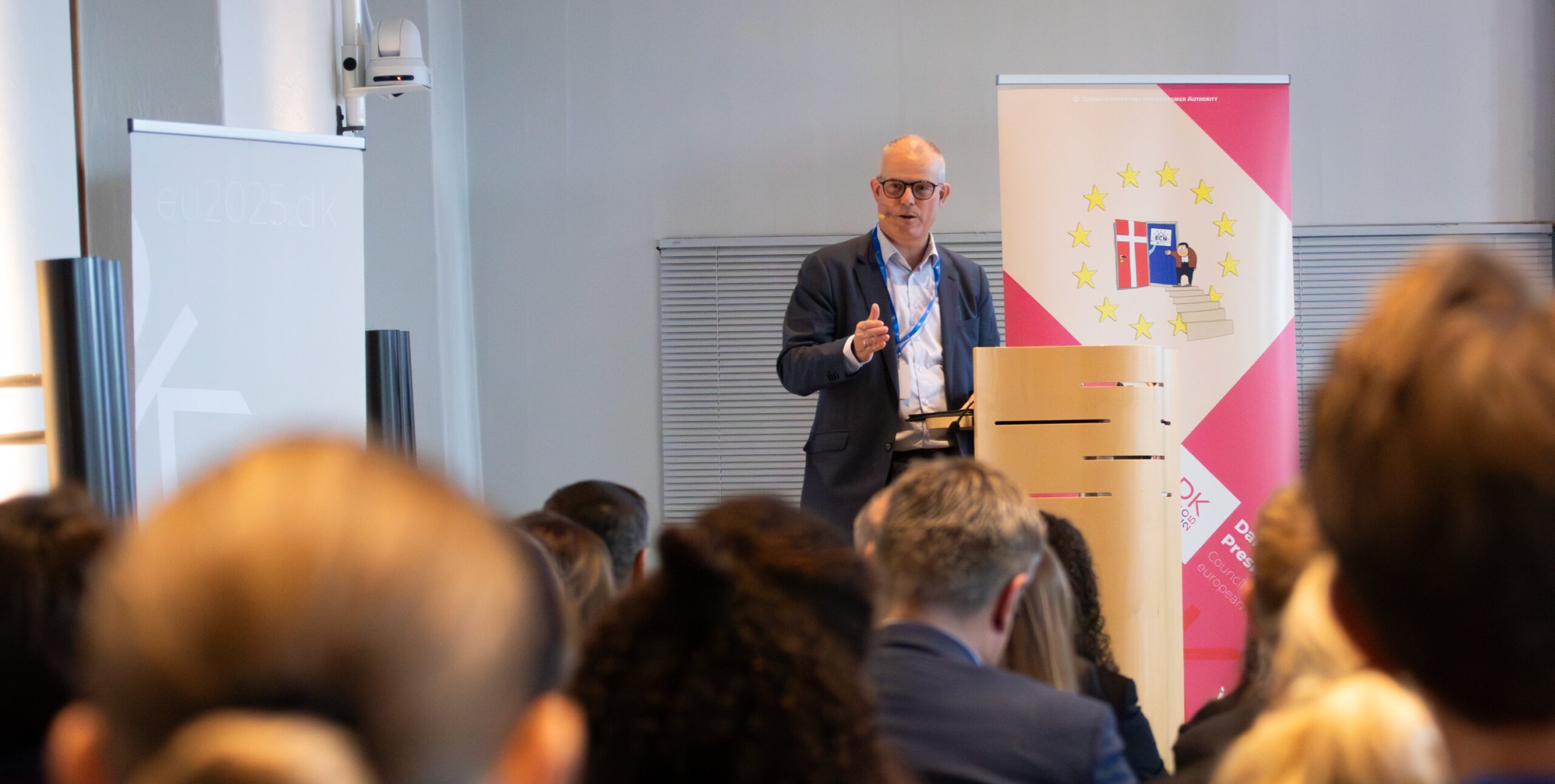
Paul Mollerup, chair of the Danish Business Regulation Forum (DBRF), summarizes the activities of RegWatchEurope (RWE) in 2025 during the Danish Presidency of RWE.
What are the key achievements you want to highlight looking back at the Danish Presidency of RWE in 2025?
We have had a busy year, and a focus for the Danish Presidency has been tapping into the massive momentum for better regulation in the EU. I think the decision to focus on the EU has been crucial, as we all experience the increasing effect of EU legislation on our national legislation.
In January, the Commission adopted the Communication “A Simpler and Faster Europe”. This really set the tone for a lot of the workshops during the Danish Presidency. In March we invited the Commission to tell us more about the shift from focus on enforcement of EU legislation to a greater focus on the implementation phase to ensure a smoother and more effective process of transposing EU legislation to national legislative environments and thus on trying to prevent the need to focus so much on enforcement.
This theme was followed up in our workshop in September, where we invited the Commission back to speak more in depth about one of the initiatives launched with the communication from February, namely Implementation Dialogues. The key was to gain insight into the process of hosting such dialogues and key takeaways for the Commission.
In June we had a workshop that took a bit of a different focus, namely on Digitalization. The aim was to look at the possibilities of digitalization in reducing burdens for businesses, but also for us in RegWatchEurope. We had a session focusing on a Danish flagship initiative called ‘Automated Business Reporting’, which at its full utilization has a huge potential to reduce burdens for businesses by making reporting and sharing of data an automated process. The workshop also dove into the potential of using AI in our scrutiny work, for example by helping us screen both legislative proposals and impact assessments.
We have also published a number of opinions. I want to highlight our Recommendations on the revision of the Interinstitutional Agreement. This highlights the need to reinforce the commitment of all co-legislators to the principles of Better Regulation. Our contribution particularly focuses on the elements of the agreement that concern impact assessments and consultation, particularly the need to strengthen the use of impact assessments in the three EU institutions and to develop a common method for this.
What do you see as RWE’s key priorities going into 2026 and how do you see the role of better regulation evolving in the coming year?
Looking ahead to 2026, RWE’s key priorities will continue to be a strengthen engagement with the European Commission, particularly within better regulation. Following the new Von der Leyen Commission taking office in December 2024, a key focus for us has been rebuilding the cooperation with the Commissioner for Implementation and Simplification. Maintaining these ties will remain central to our work in the coming year.
Digitalization and transparency are also expected to be fundamental priorities. Over the past year, we have explored how these elements can enhance the efficiency and impact of our activities. We anticipate that better leveraging of digital tools and transparent processes will play an increasingly important role in improving the quality of impact assessments and in managing regulatory burdens more effectively.